The Growth Stack – 28 November 2026: Black Friday shows AI agents still need permission
THE DAY IN ONE READ
Black Friday shows AI agents still need permission
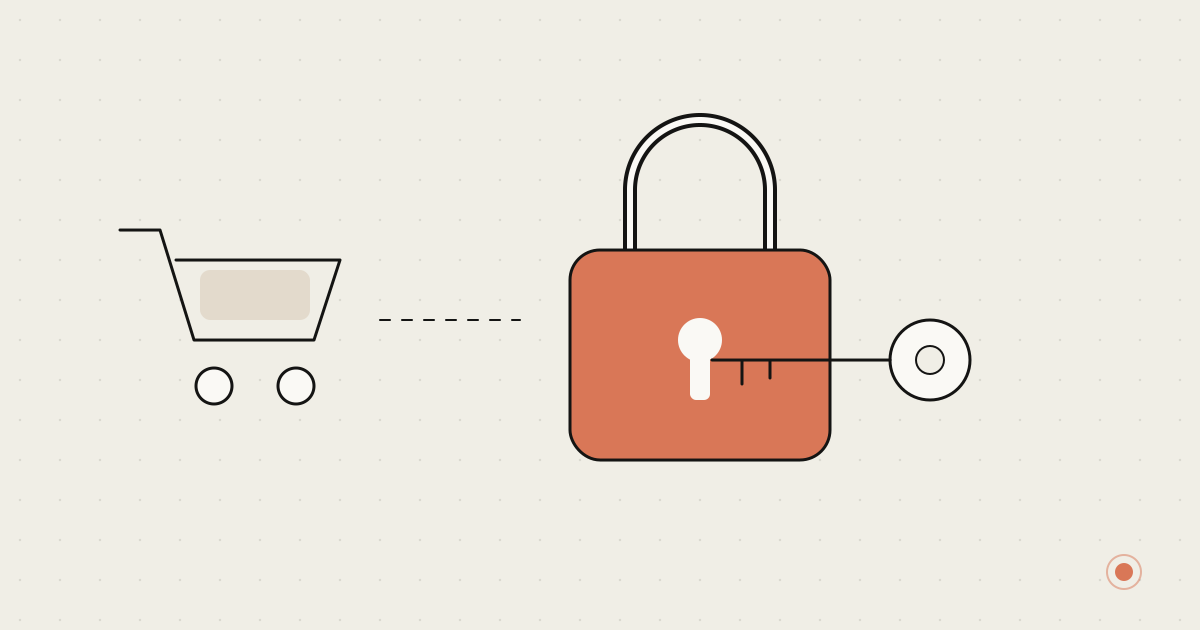
Black Friday tested AI shopping agents, and the rules on where they may shop mattered more than their volume. Bain puts agent purchases at 0.4% of global e-commerce transactions, while Amazon, eBay, United Airlines and Kohl's limit or block agents and Walmart lets Muse, Meta's personal AI agent, in with spending limits.
Spending held up. Adobe expected US Black Friday online sales of $13 billion to $13.4 billion, above its own $12.9 billion forecast. Adobe expects clicks from AI tools to US retail sites to rise 130% over the holiday season, though Bain says they are still under 1% of retailer visits.
Permission is reaching the office too. Google now requires AI agents to reach Gmail, Drive and the rest of Workspace through its own servers, enforced from 1 February 2027, with people confirming actions such as external email under rules IT sets.
This week, find out who owns your site's rules on agent browsing and checkout, and list every agent that touches your work data. Cyber Monday, which Adobe forecasts at $15.1 billion, is the next test.
Top of the day
- Google Workspace sets a 1 February deadline for how AI agents reach Gmail and Drive
- AI agents still make only 0.4% of online purchases as retailers set the rules
- US Black Friday online sales on track to pass $13 billion, ahead of Adobe's forecast
Scoreboard
Adopt (adoptability) means how easily a team can use it today: 4 is available now and directly usable, 0 is no AI angle. The full score key is at the bottom.
| Score | Adopt | Region | Industry | Headline |
|---|---|---|---|---|
| 6/14 | 4 | Global | Cross-industry | Google Workspace sets a deadline for AI agents |
| 6/14 | 3 | US, Global | Retail | AI agents make 0.4% of online purchases |
| 5/14 | 3 | US, Global | E-commerce | Black Friday online sales head for $13 billion-plus |
| 4/14 | 1 | Global | B2B | Automation Anywhere completes Boost.ai deal |
| 3/14 | 3 | Global | Cross-industry | Google urges dynamic conversion values |
| 1/14 | 0 | Not stated | E-commerce | Shopping ads get purchase volume badges |
| 1/14 | 0 | Global | E-commerce | Merchant Center adds agency Ads opportunities tab |
| 1/14 | 0 | Global | Cross-industry | December core update announced in advance |
Platform Watch: Google, Meta, Apple and more
A quiet holiday week: every meaningful update this time came from Google. Nothing significant shipped from Meta, Apple, Microsoft, Amazon or TikTok in the last 48 hours beyond what this issue already covers.
{Google Ads} [Region not stated] Shopping ads can show purchase volume badges.
Google has documented purchase signal annotations, Search Engine Land reports: eligible Shopping ads can show a rounded count of recent sales, such as “1K+ sold last 30d”. Advertisers must report item-level sales through Conversions With Cart Data (conversion tracking that also sends which products were bought) and meet privacy thresholds. Google hasn't announced a manual setting.
What to do: check that your purchase conversions send cart data, so popular products can qualify.
Source: Search Engine Land
{Google Merchant Center} [Global] Agencies get an Ads opportunities tab.
Merchant Center for Agencies, available worldwide since May, now has an Ads opportunities tab that shows, across client accounts, which products are missing out on ad visibility.
What to do: agencies can review low-visibility products across clients in one place each week instead of account by account.
Source: Search Engine Land, Google Merchant Center Help
{Google Ads} [Global] Google urges dynamic conversion values for Smart Bidding.
Google Ads Liaison Ginny Marvin encouraged advertisers to score conversion values with first-party data, such as lead quality, profit margin or predicted customer lifetime value, so Smart Bidding (Google's automated bidding) chases valuable customers, not easy conversions. Google frames this as basic to value-based bidding (bidding on what a conversion is worth, not just how many there are), not a new feature.
What to do: replace flat conversion values with margin- or quality-weighted ones, starting with your biggest campaign.
Source: Search Engine Land
{Google Search} [Global] The December 2026 core update was announced before launch.
A core update is a broad change to how Google ranks search results. Google preannounced its December 2026 core update on 24 November; it was not live yet. It is the first core update announced in advance, and Google tied the advance notice to the UK competition regulator's (CMA's) fair ranking requirements.
What to do: save a baseline of rankings and organic traffic now, so you can tell the update apart from holiday swings.
Source: Search Engine Land
AI-driven marketing
6/14 · Adoptability 3 [US] [Global] (Retail) AI agents still make only 0.4% of online purchases as retailers set the rules
Bain puts autonomous agent purchases at 0.4% of global e-commerce transactions and 0.2% of value. Amazon, eBay, United Airlines and Kohl's limit or block agents; Walmart lets Muse shop with spending limits and approvals. Those two shares also mean agent orders currently average about half the value of a typical online order.
Why it matters: the volume is small, but each shop's rules on browsing, checkout and liability are being set now.
Revenue generation
5/14 · Adoptability 3 [US] [Global] (E-commerce) US Black Friday online sales on track to pass $13 billion
Adobe expected $13 billion to $13.4 billion of US online sales on Black Friday, above its $12.9 billion forecast; by 6:30 p.m. Eastern shoppers had spent $9.7 billion, up 12.8%. Salesforce projected $83 billion worldwide for the full day; it measures differently from Adobe, so compare each with its own prior year.
Why it matters: judge your weekend against your own 2025. Treat AI referral numbers as a minimum, because they only count shoppers who clicked a link in an AI tool.
Product solutions
6/14 · Adoptability 4 [Global] (Cross-industry) Google Workspace sets a 1 February deadline for how AI agents reach Gmail and Drive
Google made its Workspace MCP servers (official connection points built on the Model Context Protocol, an open standard for linking AI agents to tools) and its CLI (a command-line tool) generally available. AI agents must use them instead of calling Workspace's REST APIs, the standard programming interfaces, directly. Enforcement starts on 1 February 2027, and billing for agents' usage quotas on 1 April 2027.
Why it matters: a reporting agent built on direct API calls has to be moved to Google's route before the deadline, so it needs an owner and a plan.
4/14 · Adoptability 1 · M&A 2 · Product 1 [Global] (B2B) Automation Anywhere completes its Boost.ai acquisition
Automation Anywhere closed its purchase of Boost.ai, which makes conversational and voice AI for regulated industries, on 24 November. It bought Aisera in 2025.
Why it matters: customer-service chat and back-office automation are being sold as one product, so the bot that answers can also complete the task.
Sources: Automation Anywhere
Further reading
- Salesforce: Record Cyber Week expected to deliver $75.8B in AI-driven sales (a forecast of sales influenced by AI and agents, not purchases agents completed, over 24 to 30 November)
- Bain & Company: Reality Check: Agentic Commerce in Retail
- Walmart: Meta's Muse can now shop Walmart's Black Friday deals
Why this matters: AI is changing where shoppers find you and how your team's tools reach your data, and both change what growth costs. To get the week's best stories every Monday, sign up for The Growth Stack weekly digest with the form on this page, or browse every post on the blog.
Scores: AI adoptability 0–4 (highest weight) plus R&D, partnership, M&A, revenue and product 0–2 each, out of 14. Written from the linked sources; read them for full details.